
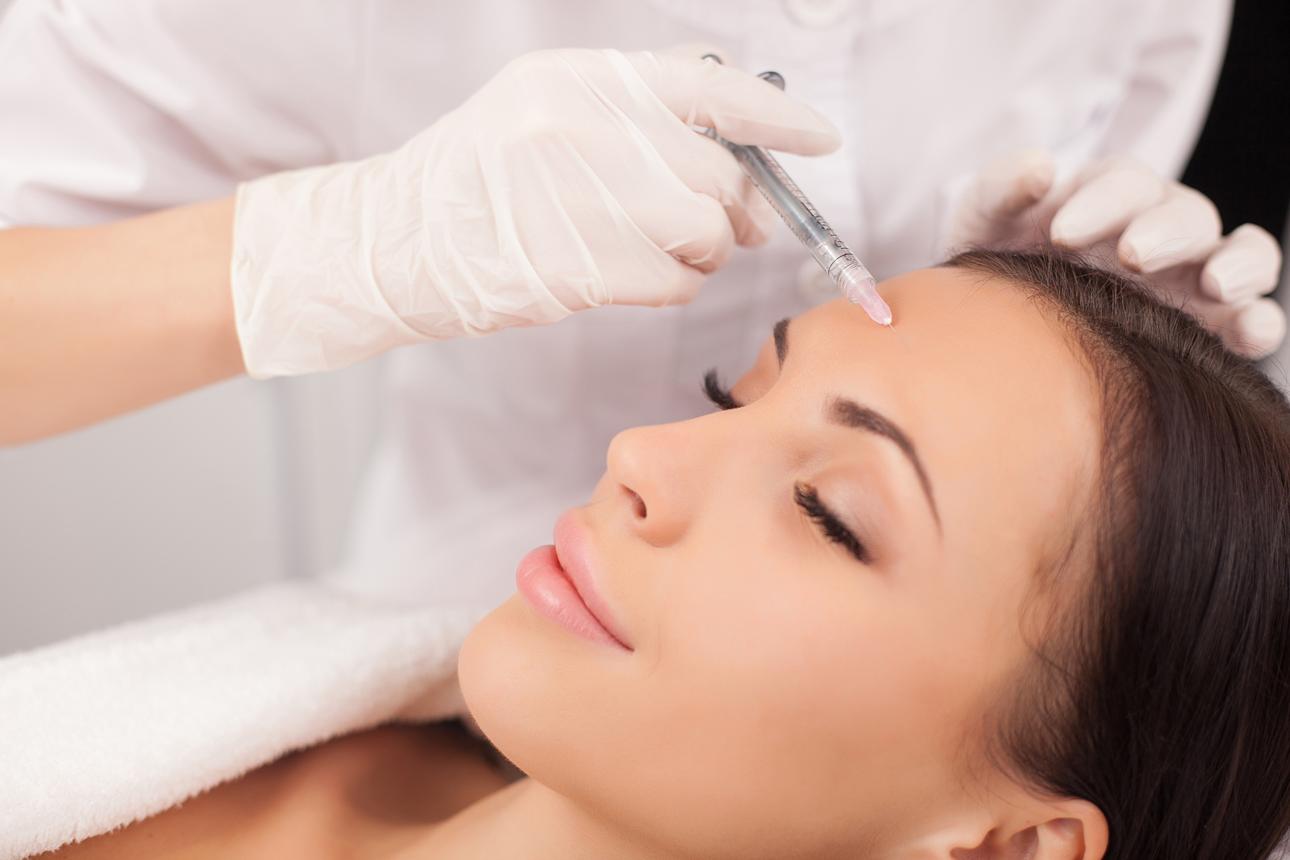
The long-term effects of Botox are often discussed as though smoother expression lines and slower facial ageing are the same outcome. They are not. Dr. Sasi Kiran Attili is a UK-trained dermatologist and board-certified dermatopathologist who evaluates skin ageing by separating muscle activity from changes in the epidermis, dermis, facial fat, supporting ligaments, and deeper facial structure. This distinction is essential for anyone considering preventive Botox, repeated injections, or treatment after years of cosmetic procedures.
Botulinum toxin can be an effective treatment for selected dynamic lines. A responsible assessment must also explain what it does not treat and where evidence about decades of repeated cosmetic use remains incomplete.
Understanding the Long-Term Effects of Botox
Botox is a brand of botulinum toxin that temporarily reduces nerve-to-muscle signalling. When injected into a selected facial muscle, it weakens contraction and decreases the repeated folding of the overlying skin. This can soften frown lines, forehead lines, and crow’s feet when muscle movement is an important cause.
The treatment does not replace collagen, reverse solar elastosis, correct pigmentation, restore facial volume, tighten supporting ligaments, or reverse skeletal remodelling. A forehead may therefore appear smoother while the skin and deeper tissues continue to age.
Reduced muscular use may also lead to a reduction in muscle volume. This is an expected biological possibility and is deliberately used when botulinum toxin is injected into enlarged masseter muscles to reduce jaw width. What remains uncertain is the long-term structural significance of repeated treatment in smaller facial muscles over several decades.
Why Standard Treatments Often Fail
Many patients approach facial ageing as a single problem and are offered a single procedure. Treatment is less likely to meet expectations when the actual concern has not been separated into dynamic lines, static creases, pigmentation, skin texture, volume change, or tissue descent.
Botox may work well for a strong frown muscle but disappoint a patient whose main concern is sun-damaged texture or lower-face laxity. Conversely, laser treatment may improve skin quality but cannot reproduce the effect of weakening a powerful expression muscle.
Another source of dissatisfaction is the assumption that starting injections early will prevent facial ageing. Reduced folding may delay one expression crease, but it does not stop collagen loss, ultraviolet damage, or structural changes elsewhere in the face.
The Diagnostic Approach
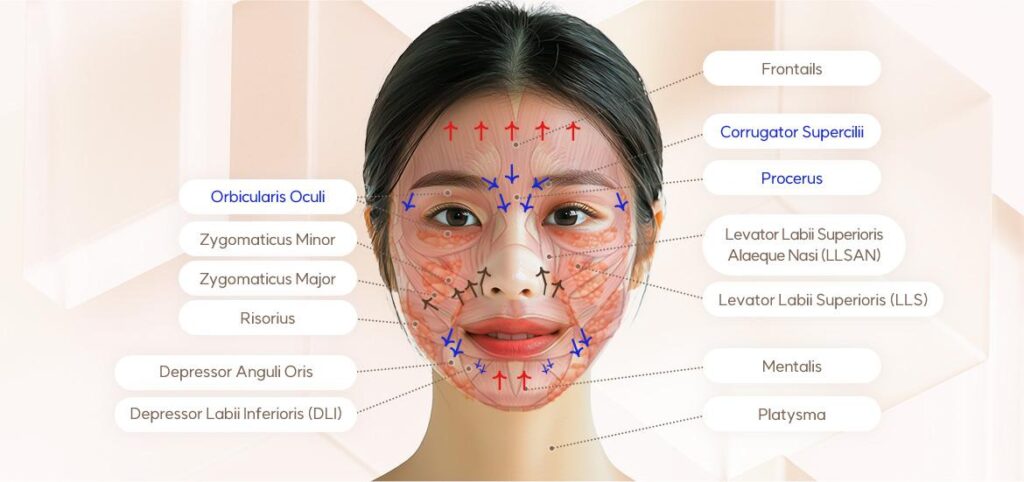
A specialist assessment examines the face at rest and during movement. The distribution and depth of lines are assessed alongside muscle strength, asymmetry, eyebrow position, skin thickness, pigmentation, texture, scarring, facial volume, and tissue descent.
Previous treatment history is also relevant. The clinician needs to understand which products were used, where they were injected, how frequently treatment was repeated, whether the response changed, and whether the patient noticed altered expression, contour, heaviness, or asymmetry.
The objective is not simply to decide whether another injection can be performed. It is to identify which anatomical component is producing the patient’s concern and whether botulinum toxin is the most proportionate intervention.
Evidence-Based Treatment Strategies
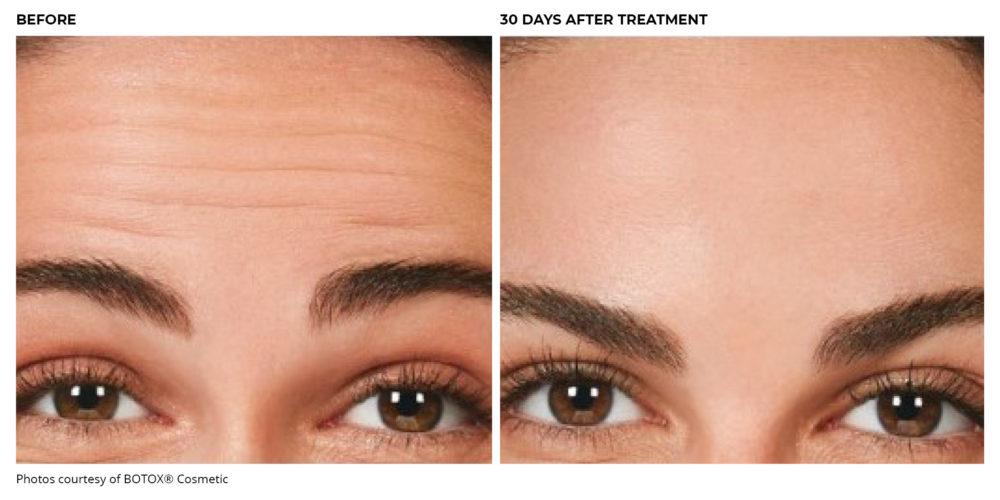
Use Botox for a Defined Dynamic-Line Problem
Botulinum toxin is most defensible when a patient is troubled by a prominent expression line that corresponds to identifiable muscle activity. The expected effect, duration, limitations, and possibility of unwanted weakness or asymmetry should be discussed before treatment.
Treatment does not necessarily require complete immobility. Dose and placement should reflect facial anatomy and the patient’s preference for preserved movement.
Treat the Skin When the Problem Is in the Skin
Photoprotection remains foundational because continuing ultraviolet exposure contributes to further collagen and elastin damage. Sunscreen does not erase existing damage, but it limits further injury.
Topical retinoids have controlled evidence for photoaged skin, including fine wrinkles, pigmentation, and epidermal changes. Fractional CO₂ laser and microneedling may be considered for selected texture, scarring, or collagen-remodelling concerns, with careful assessment of post-inflammatory pigmentation risk.
Platelet-rich plasma may provide modest adjunctive benefit in selected settings, but expectations should remain proportionate to the evidence.
Assess Volume and Tissue Descent Separately

Botox does not restore lost facial volume or reposition descended tissues. Patients concerned about jowls, laxity, or structural descent need a different evaluation.
This does not mean that every such patient requires filler or surgery. It means the diagnosis should not be replaced by repeated treatment of an unrelated muscle group.
Reassess Rather Than Automatically Repeat
A patient returning every few months should not be treated solely according to the previous injection map. Changes in muscle activity, compensatory movement, eyebrow position, symmetry, skin quality, and treatment goals should be reassessed.
The best long-term strategy may involve continuing treatment, reducing the dose, changing the interval, treating fewer areas, addressing the skin, or stopping injections.
Who Should Seek a Second Opinion or Online Consultation?
A second opinion is particularly useful for treatment-resistant cases in which repeated injections have not produced the expected improvement. It may also help patients who have developed asymmetry, altered expression, contour changes, or uncertainty about whether additional treatment is appropriate.
Patients outside India can seek specialist input when they need a structured review of photographs, treatment history, previous injection areas, and competing treatment recommendations. An online consultation may also be valuable for patients who have been told that “nothing can be done” without a clear anatomical explanation.
Patients confused by conflicting claims about preventive Botox, muscle atrophy, fillers, lasers, or surgery may benefit from an assessment that separates what is established, what is plausible, and what remains uncertain. A remote opinion can guide the next step, although injections and some aspects of facial examination must be performed in person.
Frequently Asked Questions
Does Botox prevent facial ageing?
Botox can reduce repeated folding of the skin and may delay the development of a selected expression crease. It does not prevent the broader processes of ageing affecting collagen, elastin, pigmentation, facial fat, ligaments, and bone.
Calling the treatment preventive is therefore accurate only in the narrow context of a muscle-generated line. It should not be presented as comprehensive prevention of facial ageing.
Can Botox cause muscle atrophy?
Repeated weakening and reduced use can lead to loss of muscle volume. This effect is well recognised when botulinum toxin is used to reduce enlarged masseter muscles.
A very small MRI study also reported persistent volume reduction in the procerus muscle after a single treatment. The study raises a legitimate question but is too small to establish how frequently this occurs or whether it produces clinically important harm.
Are the Long-Term Effects of Botox Safe?
Short- and medium-term use is generally well tolerated when genuine products are correctly administered by an appropriately trained clinician. Recognised problems include bruising, headache, unwanted eyebrow position, eyelid drooping, asymmetry, and weakness of neighbouring muscles.
Long-term observational studies are reassuring in some respects, but they cannot establish that repeated cosmetic chemodenervation over several decades is structurally neutral. The most defensible conclusion is that major cumulative harm has not been demonstrated, while important long-term questions remain incompletely studied.
Understanding the Long-Term Effects of Botox helps patients make informed decisions about cosmetic treatment and long-term facial ageing management.
How long do the effects of Botox last?
The effect is temporary. For glabellar lines, current onabotulinumtoxinA prescribing information describes a typical duration of approximately three to four months.
Duration can vary with the product, dose, injection area, muscle strength, metabolism, and previous treatment. Repeat treatment should be based on reassessment rather than a fixed calendar alone.
The Long-Term Effects of Botox vary depending on the treatment area, dosage, and frequency of repeated injections.
Can Botox concerns be assessed through an online consultation?
Many concerns can be assessed initially through an online consultation. Standardised photographs, videos of facial movement, treatment records, product details, injection dates, and a description of symptoms can help identify whether the issue is related to muscle balance, skin quality, volume, or another process.
An online consultation cannot replace every element of an in-person examination. It can, however, provide a structured second opinion and clarify whether further injections, observation, skin treatment, imaging, or an in-person assessment should be considered.
What does a dermatopathologist look for that a regular dermatologist might miss?
Dermatopathology training provides additional expertise in how skin structure changes in disease, inflammation, scarring, sun damage, and ageing. It can help distinguish claims about surface smoothness from claims about genuine biological change in the skin.
Botox assessment still depends heavily on facial anatomy and dynamic examination rather than skin biopsy. The additional value lies in integrating visible changes with the underlying biology of the skin and critically interpreting the evidence used to support treatment claims.
What treatments address ageing skin rather than muscle movement?
Photoprotection and appropriately selected topical retinoids address continuing ultraviolet injury and photoaged skin. Pigmentation treatment, fractional CO₂ laser, microneedling, and other procedures may be considered according to the patient’s diagnosis and skin type.
Volume loss and tissue descent require separate structural assessment. No single procedure corrects every component of facial ageing.
Selected References
Koerte IK, Schroeder AS, Fietzek UM, et al. Muscle atrophy beyond the clinical effect after a single dose of onabotulinumtoxinA injected in the procerus muscle. Dermatologic Surgery. 2013;39:761–765.
Crook JL, Jahromi AH, Konofaos P. Long-term effects of repeated botulinum toxin injection in cosmetic therapeutics. Annals of Plastic Surgery. 2022;88:345–352.
Trindade de Almeida AR, Marques ERM, Contin LA, et al. Long-term consecutive onabotulinumtoxinA injections for facial aesthetic treatment: a real-world study. Dermatologic Surgery. 2025;51:1133–1138.
Master M, Azizeddin A, Master V. Hyaluronic acid filler longevity in the mid-face: a review of 33 magnetic resonance imaging studies. Plastic and Reconstructive Surgery Global Open. 2024;12:e5934.
Sitohang IBS, Makes WI, Sandora N, Suryanegara J. Topical tretinoin for treating photoaging: a systematic review of randomized controlled trials. International Journal of Women’s Dermatology. 2022;8:e003.
If you have a complex Botox-related concern, have undergone repeated treatments without satisfactory results, or need a specialist second opinion about facial ageing, Dr. Attili offers structured online consultations. Book an online consultation to clarify whether further botulinum toxin, skin-directed treatment, observation, or an in-person structural assessment is appropriate.