

Most rashes, pigmentation changes, infections and hair problems begin and end in the skin. Occasionally, however, skin signs of internal disease can provide an important clue to changes involving blood sugar, hormones, blood fats, nutrition or other organs.
Dr. Sasi Kiran Attili is a UK-trained dermatologist and board-certified dermatopathologist. This combination of clinical dermatology and microscopic diagnosis is particularly useful when a skin problem behaves unusually, keeps recurring, changes rapidly or occurs alongside symptoms elsewhere in the body.
Recognising these situations does not mean assuming that every unexplained rash represents serious disease. The purpose of specialist assessment is the opposite: to separate common skin disease from the smaller group of presentations in which further investigation is justified.
Skin Signs of Internal Disease: Understanding the Clinical Pattern
A skin finding rarely identifies an internal disease by itself. The same symptom can occur for many different reasons.
Itching, for example, may accompany an ordinary skin disorder, dryness, medication use or occasionally a systemic condition. Hair loss may occur because of genetic hair loss, illness, stress, nutritional factors, medication or thyroid disease. Pigmentation can be constitutional, inflammatory, metabolic or hormonal.
What makes a finding more significant is usually the pattern around it.
Dermatologists therefore consider factors such as how suddenly the problem appeared, whether it repeatedly returns, whether several different skin problems occur together and whether the patient also has symptoms such as weight loss, excessive thirst, frequent urination, menstrual disturbance, abdominal pain or marked fatigue.
The objective is not to perform extensive blood tests on every patient. It is to recognise when the clinical pattern provides a reasonable reason to look beyond the skin.
Skin Signs of Internal Disease: Common Presentations
Recurrent Skin Infections and Diabetes
Diabetes does not always announce itself through an unusual or dramatic skin disorder.
Some patients instead develop repeated fungal infections, genital or groin infections, recurrent boils, cellulitis, slow-healing wounds or diabetic foot complications. Persistent itching may also occasionally prompt consideration of blood sugar abnormalities when the clinical context supports it.
Repeated balanitis in men or recurrent fungal infection around the genital or groin area can therefore justify assessment for undiagnosed or poorly controlled diabetes.
These symptoms do not prove that someone has diabetes. Equally, normal wound healing does not reliably exclude diabetes, particularly during its earlier stages.
Acanthosis Nigricans and Insulin Resistance
Darkened skin around the neck, armpits or groin is common and has many possible causes. Acanthosis nigricans has a more characteristic appearance: the skin becomes darker, thicker and often feels velvety.
This pattern is frequently associated with insulin resistance and is particularly common in people who are overweight.
The appropriate response is not automatically an extensive hormonal investigation. Clinical interpretation may include body weight, waist size, blood pressure, family history and appropriate assessment of blood sugar or metabolic risk.
In children, the broader clinical picture is particularly important. A visible skin sign should guide sensible assessment rather than automatically trigger a large battery of investigations.
Acne, Facial Hair and Hormonal Disorders
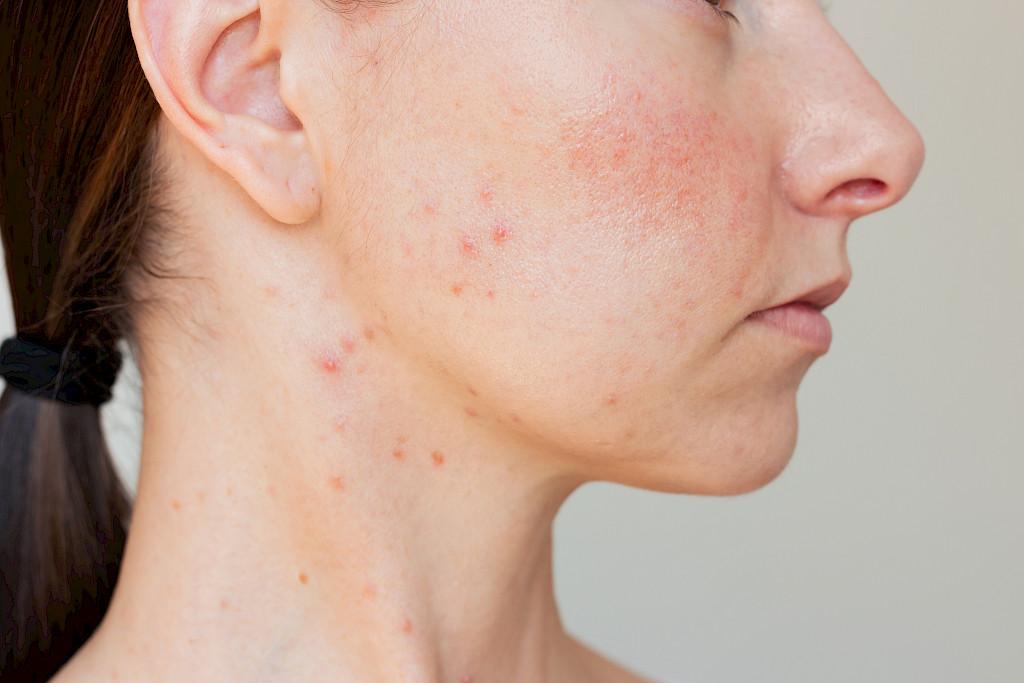
Acne is extremely common, and some facial hair in women is also normal. Neither finding alone establishes a hormonal disorder.
The likelihood of an underlying endocrine problem becomes more relevant when coarse facial or body hair occurs alongside repeatedly irregular menstrual cycles, significant scalp hair thinning, rapid progression or other signs of increased androgen effect.
The speed of change matters.
Hair growth developing gradually over many years has a different clinical significance from new coarse hair developing over a few months alongside voice deepening, rapid scalp hair loss or other marked physical changes.
Rapidly developing symptoms deserve prompt assessment rather than being automatically attributed to polycystic ovarian syndrome, age or menopause.
Sudden Yellow Skin Bumps and Very High Triglycerides
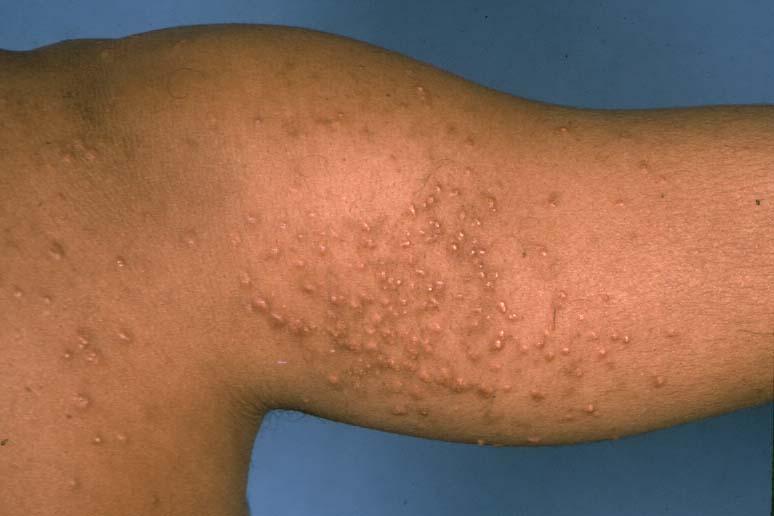
An abrupt eruption of multiple small yellowish papules, particularly over the limbs, buttocks or extensor areas, can occasionally be associated with markedly elevated triglyceride levels.
This finding is sometimes seen in association with poorly controlled diabetes.
Severe hypertriglyceridaemia can be medically significant because it may be associated with inflammation of the pancreas. A patient who develops this type of eruption together with severe abdominal pain requires appropriate medical assessment rather than treatment of the skin lesions alone.
Hair Loss, Dry Skin and Thyroid Disease
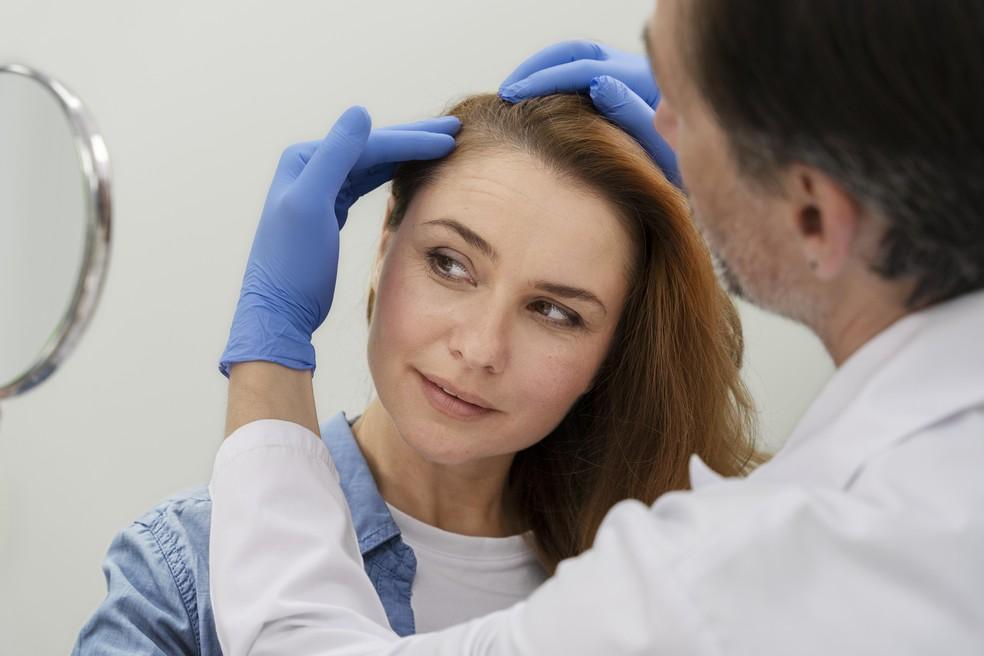
Hair loss and dry skin are frequently associated with thyroid disorders, but they are also extremely common in people with normal thyroid function.
Neither symptom is sufficiently specific to diagnose thyroid disease.
A thyroid assessment becomes more clinically meaningful when skin or hair changes occur together with symptoms such as unexplained weight change, altered heat or cold tolerance, palpitations, constipation, menstrual changes or unusual fatigue.
The clinical context therefore determines whether thyroid testing is likely to be useful.
Unusual Pigmentation and Adrenal Disease
Addison’s disease can occasionally produce increased pigmentation, including changes affecting the knuckles, gums, scars and skin folds.
Patients may also experience systemic symptoms such as marked fatigue, weight loss, dizziness, vomiting or salt craving.
However, pigmentation is not specific to adrenal disease. Other causes, including nutritional conditions such as vitamin B12 deficiency, can sometimes produce overlapping appearances.
Pigmentation should therefore be interpreted as part of a clinical pattern rather than used to make a diagnosis in isolation.
Skin Changes Caused by Potent Steroid Creams
An internal problem can sometimes arise from treatment being applied to the skin.
Potent topical corticosteroids are sometimes used repeatedly or over large areas for fungal infection, itching, acne, pigmentation or other problems without appropriate medical supervision. Steroids may also be present in some combination preparations.
With sufficiently extensive or prolonged exposure, potent topical steroids can be absorbed systemically. Possible consequences described in clinical practice include changes in blood sugar, blood pressure, body composition and natural steroid hormone regulation. Children may be particularly vulnerable to excessive exposure.
A patient using steroid medication should tell their doctor about all sources, including creams, tablets, injections, inhalers and nasal preparations.
Heavy or prolonged steroid exposure should not be stopped or altered without appropriate medical advice when systemic suppression is a concern.
Why Standard Treatments Often Fail When an Internal Cause Has Been Missed
Many patients with persistent skin symptoms have already tried antifungal creams, steroid preparations, moisturisers, antibiotics or treatments purchased without a clear diagnosis.
When the problem repeatedly returns, the issue may not simply be that another cream is needed.
Sometimes the original diagnosis is incorrect. Sometimes treatment has been inadequate or inappropriate. In other cases, a contributing factor such as poorly controlled blood sugar, medication exposure or a hormonal change has not yet been recognised.
This is why recurrent or atypical disease benefits from reassessment rather than indefinite repetition of the same treatment.
The presence of an internal association does not mean that the skin manifestation should be ignored. Both parts of the problem may require attention, but the correct approach depends first on establishing what is actually happening.
The Diagnostic Approach to Skin Signs of Internal Disease
A specialist evaluation starts with the skin itself.
The morphology, texture, distribution and timing of a rash or lesion can substantially narrow the possibilities. The dermatologist then considers how the problem developed, previous treatments, medications, medical history, family history and symptoms affecting other systems.
Investigations should follow the clinical question rather than precede it.
Depending on the presentation, further assessment might involve discussion of blood sugar, metabolic factors, thyroid or hormonal symptoms, medication exposure or other medical evaluation. The source article does not support a universal investigation panel, because there is no single set of blood tests appropriate for every unexplained skin symptom.
When a lesion itself is diagnostically uncertain, examination of a skin biopsy can sometimes add another level of information.
Evidence-Based Treatment Strategies for Skin Signs of Internal Disease
There is no single treatment for skin signs of internal disease because the visible problem can represent many different mechanisms.
The first priority is to establish whether the condition is primarily dermatological, whether an internal factor is contributing or whether both processes are occurring together.
A recurrent fungal infection, for example, still requires appropriate diagnosis and treatment of the infection. If the pattern also raises concern about diabetes, identifying poor blood sugar control may be relevant to reducing recurrence.
Acanthosis nigricans should not be managed simply as unwanted pigmentation when the broader presentation suggests metabolic risk. Similarly, repeatedly treating new acne or rapidly progressive facial hair as a cosmetic problem may delay assessment when significant hormonal changes are occurring.
Medication-related problems require equally careful review. Repeated use of potent steroid-containing creams may alter the appearance of a skin disease while also creating additional complications.
The most useful treatment strategy is therefore targeted rather than indiscriminate: identify the skin diagnosis, recognise relevant systemic clues, investigate when the clinical pattern justifies it and address the underlying factor alongside the skin condition where appropriate.
When Rare Skin Findings Require Broader Investigation
Rarely, the skin can provide clues to inherited disorders involving hormone-producing organs or internal tumours.
Certain combinations of unusual facial lesions, nodules, fatty lumps, oral lesions or multiple similar findings within a family may prompt a dermatologist to consider an inherited syndrome.
These disorders are uncommon and cannot be reliably diagnosed from internet photographs.
Their importance lies in pattern recognition. When a genuinely suspicious constellation of findings is identified, further evaluation may occasionally have implications not only for the individual patient but also for relatives.
Similarly, an unexplained firm skin nodule can occasionally represent disease originating elsewhere in the body. Such presentations are rare, and ordinary skin lumps should not automatically create concern about cancer. A lesion that is unusual, rapidly progressive, multiple or associated with significant systemic symptoms deserves proper clinical assessment rather than assumption.
Who Should Seek a Second Opinion or Online Consultation?
A second dermatology opinion can be useful when the skin problem does not behave as expected.
This includes patients with recurrent infections despite appropriate treatment, unexplained pigmentation accompanied by other symptoms, rapidly developing hormonal-type changes, persistent unexplained itching, unusual nodules or skin lesions, or a condition that repeatedly returns despite apparently reasonable treatment.
Online specialist input may also be valuable for:
- treatment-resistant skin problems
- patients outside India seeking specialist dermatology input
- people who have been told that “nothing can be done” without a clear explanation
- patients confused by conflicting diagnoses or treatment claims
- people who want to know whether an in-person examination, biopsy or targeted investigation is the appropriate next step
An online consultation cannot replace every physical examination or procedure, but it can often help determine the most appropriate next stage of assessment.
Frequently Asked Questions
Does a recurrent fungal infection mean I have diabetes?
No. Fungal infections are common and have many causes.
However, repeatedly recurring genital, groin or other fungal infections can sometimes occur in people with undiagnosed or poorly controlled diabetes. When the pattern is persistent, discussing blood sugar assessment with a doctor may be sensible.
Does a dark neck always mean insulin resistance?
No. Dark pigmentation around the neck has several possible causes.
Acanthosis nigricans is more suggestive when the skin is not only darker but also thickened and velvety. The significance depends on the overall clinical context, including metabolic risk factors.
Should everyone with hair loss have thyroid tests?
Not necessarily.
Hair loss is extremely common and has numerous possible causes. Thyroid testing is generally more informative when hair changes occur alongside other symptoms or clinical findings that raise suspicion of thyroid dysfunction.
Can skin signs of internal disease be assessed through an online consultation?
Many can be assessed initially online, particularly when good-quality photographs and a detailed history are available.
An online dermatologist may be able to narrow the differential diagnosis and advise whether targeted blood tests, an in-person examination or a biopsy is appropriate. Some skin findings cannot be conclusively diagnosed remotely.
Can an unusual skin lesion be a sign of cancer?
Rarely, yes, but most skin lumps and rashes are not manifestations of internal cancer.
Concern is greater when a lesion has unusual clinical features, appears rapidly, occurs with multiple unexplained lesions or is accompanied by systemic symptoms such as significant unexplained weight loss. Such findings require proper medical evaluation rather than self-diagnosis.
What does a dermatopathologist look for that a regular dermatologist might miss?
Dermatopathology adds microscopic examination of skin tissue to clinical dermatology.
The value is not that every patient requires a biopsy or that one specialty replaces another. In selected difficult cases, correlating the clinical appearance with microscopic findings can help distinguish diseases that look similar on the surface and clarify an uncertain diagnosis.
The Skin Is a Clinical Clue, Not a Diagnosis
Skin changes can sometimes reflect abnormalities involving blood sugar, hormones, nutrition, medication exposure or internal organs. Most skin disorders, however, remain skin disorders and do not require extensive systemic investigation.
The key question is whether the presentation fits the expected pattern.
If you have complex skin signs suggesting internal disease, have tried treatments without success, or need a specialist second opinion, Dr. Attili offers structured online consultations. [Book Online Consultation]