
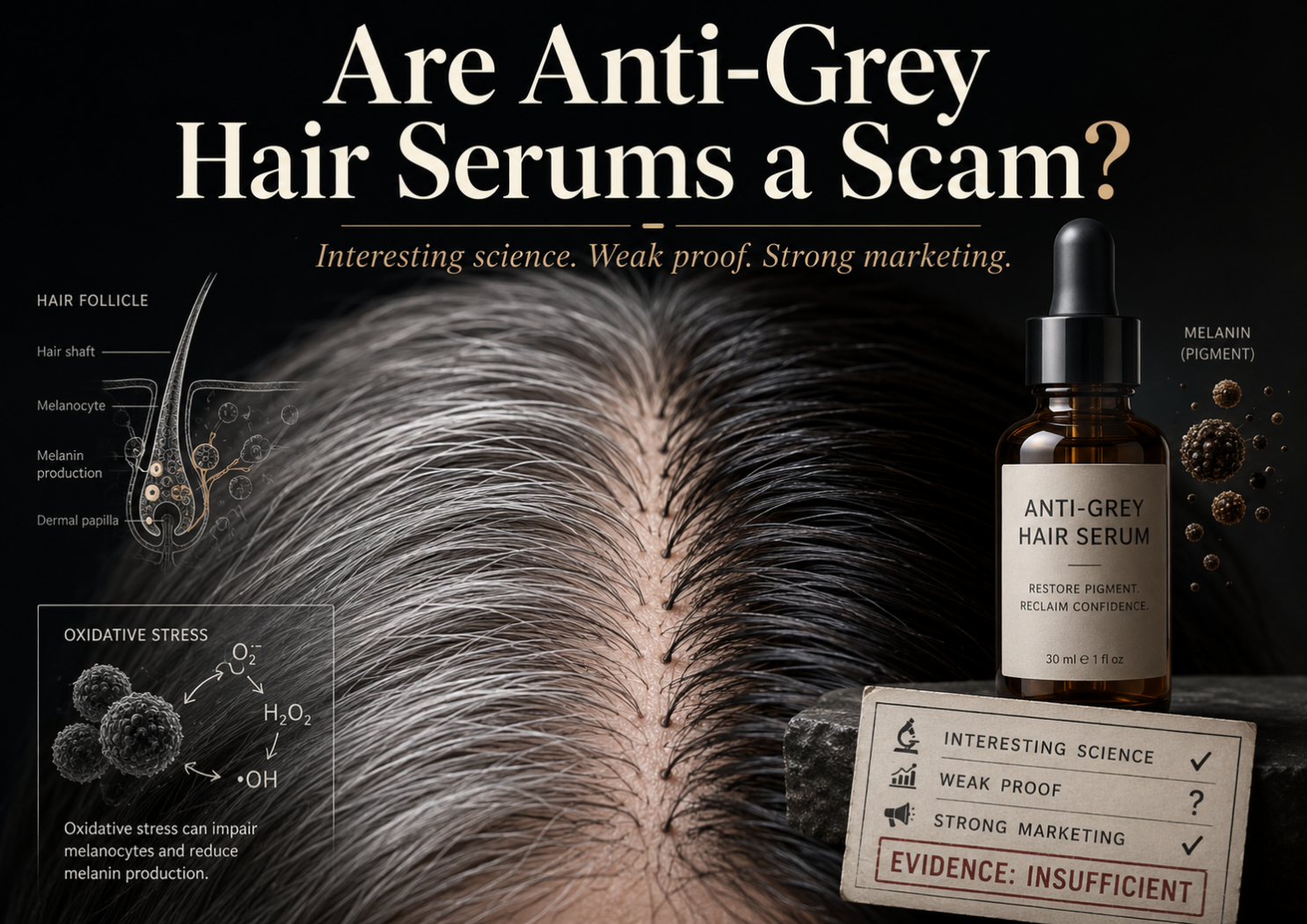
Anti-grey hair serums are promoted as treatments that can reactivate pigment cells, reduce oxidative stress and restore a person’s natural hair colour. The biological explanations can sound convincing, but the clinical evidence remains limited. Dr. Sasi Kiran Attili is a UK-trained dermatologist and board-certified dermatopathologist who evaluates hair disorders by separating plausible mechanisms from outcomes that have actually been demonstrated in patients. At present, no cosmetic serum has strong, independently replicated evidence that it can reliably produce substantial and lasting reversal of ordinary age-related greying.
Some ingredients deserve further investigation, and limited repigmentation is biologically possible in selected follicles. That is different from proving that a marketed topical product will create a visible improvement for most users
Understanding Grey Hair and Repigmentation
Hair receives its colour from melanin produced by melanocytes within the growing hair follicle. As follicles age, pigment-producing cells and their supporting stem-cell systems may become depleted or function less effectively. Oxidative stress, mitochondrial changes, altered cellular signalling and changes in the follicular environment have all been investigated as possible contributors to greying.[1,2]
The hair visible above the scalp is no longer living tissue. A grey section of an existing shaft cannot restart melanin production after it has emerged from the follicle. Genuine repigmentation would therefore appear as darker new growth close to the scalp, with the older grey portion remaining visible farther along the shaft.
This distinction matters when assessing anti-grey hair serums. A coating, temporary colourant or change in the way light reflects from an oily hair shaft may make hair appear darker without changing pigment production inside the follicle. Reliable assessment requires repeated examination of the same scalp area under controlled conditions.
Why Anti-Grey Hair Serum Treatments Often Fail
Many topical products are built around a reasonable scientific hypothesis. For example, an antioxidant may reduce oxidative stress in cultured cells, or a peptide may affect a pathway involved in melanocyte activity. The difficulty is translating that laboratory effect into visible hair repigmentation.
An active ingredient must remain stable in its formulation, cross the scalp barrier, travel into the appropriate part of the follicle and reach pigment-producing cells at an effective concentration. A molecule that changes cellular activity in a laboratory does not necessarily reach the hair bulb after routine scalp application.
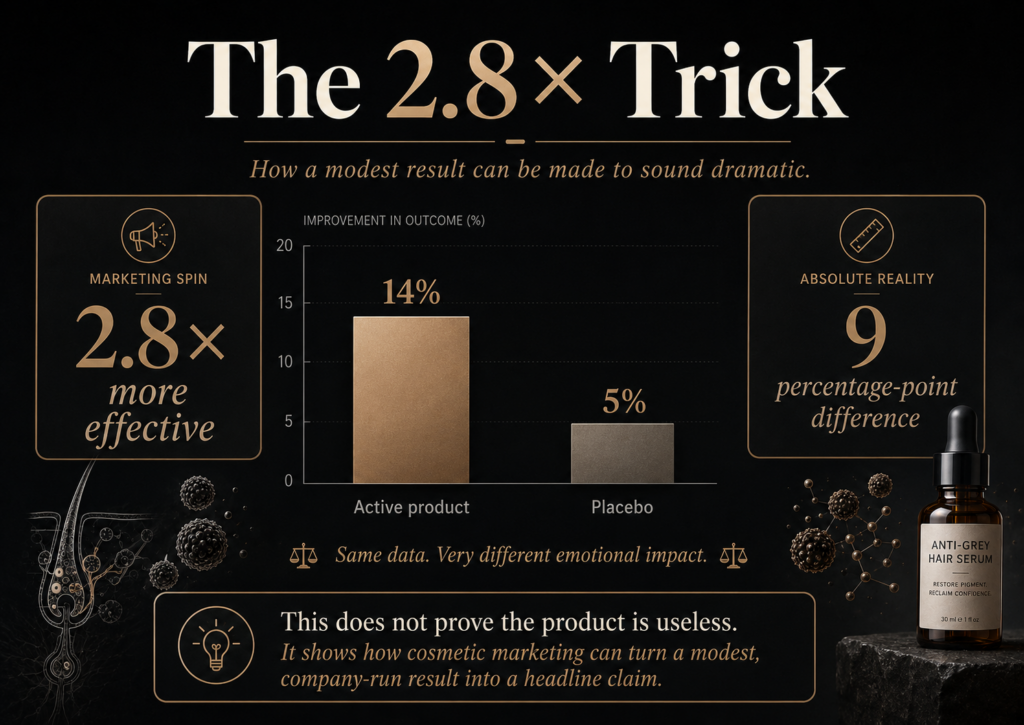
Clinical studies can also produce results that sound more impressive than they appear. A change in a pigmentation-related protein is not the same as darker hair. A statistically significant reduction in newly counted grey hairs may not produce an improvement that patients or clinicians can see. Small studies without placebo groups are particularly vulnerable to natural variation, selective photography and observer bias.
The Diagnostic Approach to Premature or Rapidly Progressive Greying
A specialist assessment begins by establishing when the greying started, how quickly it has progressed and whether close relatives developed grey hair at a similar age. The distribution of affected hairs, associated hair loss, scalp inflammation, medication history, diet, smoking history and other symptoms may alter the clinical interpretation.
Premature greying is not automatically evidence of a nutritional deficiency or systemic illness. However, targeted investigation may be reasonable when greying begins unusually early, progresses rapidly or occurs alongside fatigue, weight change, autoimmune symptoms, dietary restriction or signs of anaemia. Blood tests should be selected from the clinical history rather than ordered as an indiscriminate panel.
Standardised photographs may help document progression. When a patient is using a topical product, examining new growth at the root is more informative than comparing general photographs taken under different lighting.
Evidence-Based Treatment Strategies for Grey Hair
For ordinary age-related greying, permanent and semi-permanent hair colourants remain the most dependable way to change visible hair colour. They do not restore follicular pigment production, but their cosmetic outcome is considerably more predictable than that of anti-grey serums.
When greying is premature or has changed unexpectedly, the first step is to identify whether there is a clinically relevant underlying factor. A confirmed vitamin B12, iron or other deficiency should be corrected appropriately. Thyroid disease or another associated disorder should be treated on its own merits. Supplements should not be prescribed simply because a nutrient participates in melanin production; supplementation is most rational when a deficiency or specific indication has been established.
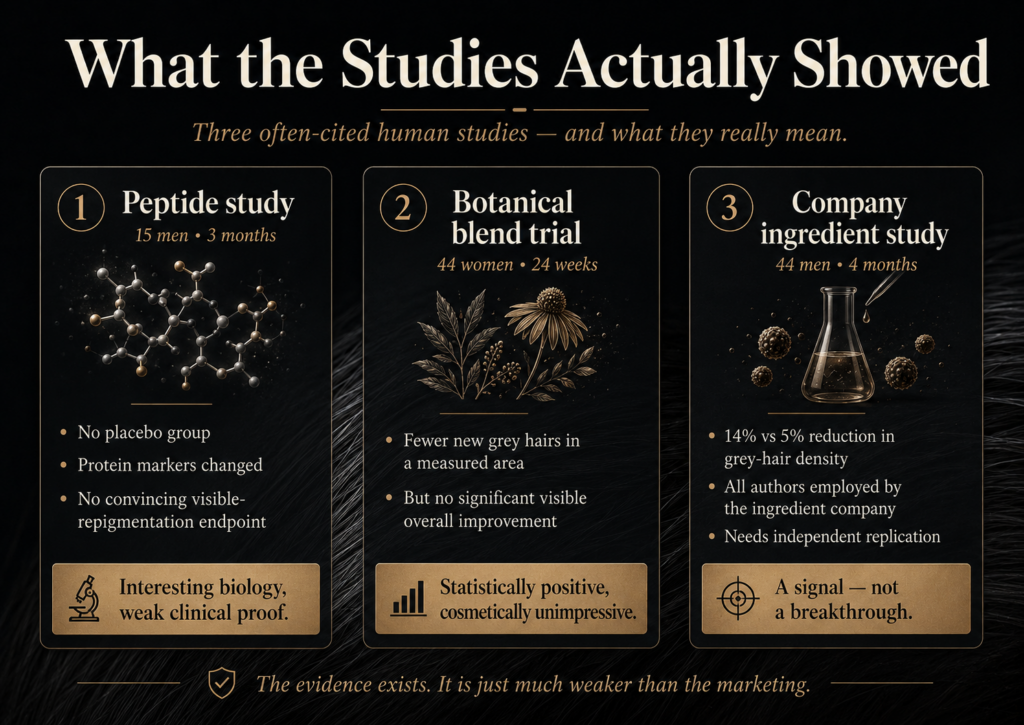
Palmitoyl tetrapeptide-20 has been investigated for its effects on pigmentation pathways. A small study involving 15 men reported changes in several pigmentation-related biological markers, but it did not include a placebo group or establish dependable visible repigmentation.[3] A published case report described improvement with a topical formulation containing this peptide, but a single patient cannot establish efficacy for the wider population.[8]
A controlled botanical-product study reported fewer newly counted grey hairs in a defined scalp area, but participants and investigators did not identify a significant overall visible improvement.[4] Another company-developed ingredient produced a modest difference compared with placebo, but independent replication in a larger and more diverse population is still needed.[5]
These findings justify continued research. They do not yet support a promise that established age-related greying can be predictably reversed.
Several newer treatments remain under formal investigation rather than established use. Registered studies are examining agents such as topical minoxidil and investigational compounds for repigmentation, while a large cosmetic-product study is still collecting outcome data. These trials reinforce that biological treatment of grey hair remains an active research field rather than settled clinical practice.
Who Should Seek a Second Opinion or Online Consultation?
An online dermatology consultation may be useful when greying starts much earlier than expected, progresses over a short period or is accompanied by hair shedding, scalp symptoms or changes elsewhere in the body. It can also help patients who have already taken multiple supplements or used expensive serums without understanding whether the treatment has a plausible indication.
Specialist review is particularly relevant for treatment-resistant cases, patients outside India seeking structured advice, people who have been told that no assessment is necessary despite unusual progression, and patients confused by conflicting product claims. The purpose of consultation is not to promise repigmentation. It is to distinguish ordinary age-related change from a presentation that warrants investigation, evaluate the quality of treatments already being used and establish realistic options.
Frequently Asked Questions
Do anti-grey hair serums work?
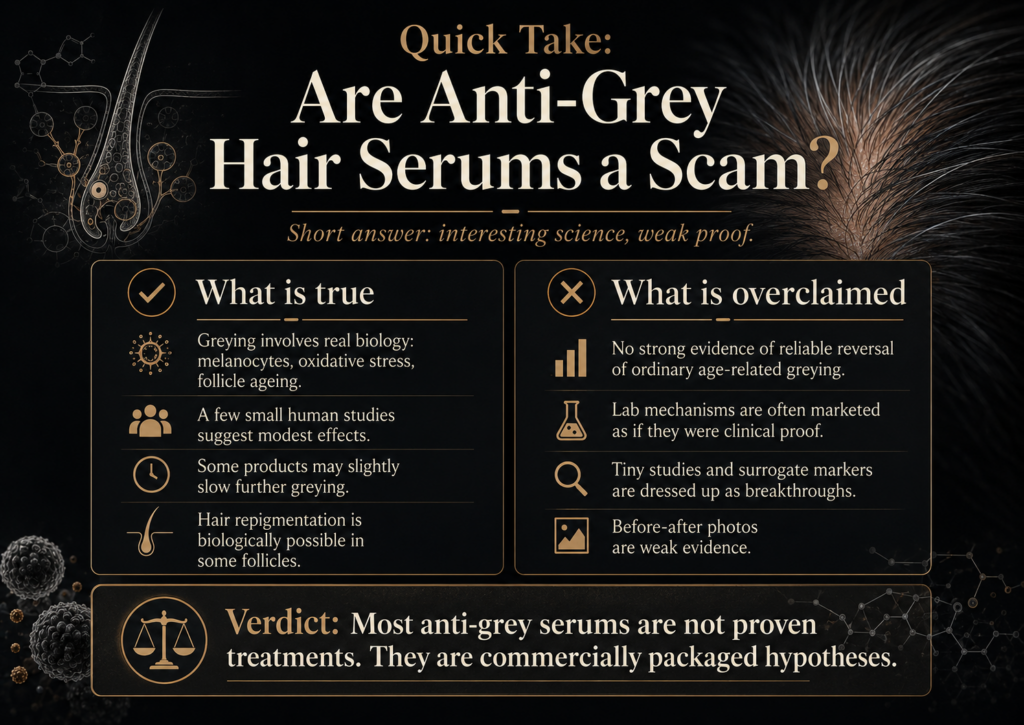
Some ingredients have plausible biological mechanisms, and small studies have reported laboratory changes or modest effects on grey-hair counts. The evidence does not currently show that a serum can reliably produce substantial, visible and durable reversal of established age-related greying in most users.
Can grey hair become naturally pigmented again?
Repigmentation can occur in individual hairs, and it has been documented in association with changes in stress and with certain systemic medicines.[6,7] These observations show that some follicles may retain pigment-producing capacity, but they do not prove that an over-the-counter serum can trigger the same result.
How can I tell whether a serum is causing genuine repigmentation?
Look for darker new growth emerging from the root of the same hair or from hairs in a consistently photographed scalp area. A general change in shine, wetness, lighting or shaft coating is not sufficient evidence of biological repigmentation.
Should I take vitamin B12, biotin, copper or iron for grey hair?
These supplements should not be taken solely because hair is grey. Testing and replacement may be appropriate when the history or examination suggests a deficiency, but excessive or unnecessary supplementation can be unhelpful and may cause harm.
Can premature grey hair be treated through an online consultation?
An online consultation can assess the age of onset, progression, family history, associated symptoms, photographs and previous test results. Dr. Attili can then advise whether targeted blood tests, medication review or an in-person scalp examination is needed, although online assessment cannot guarantee that pigmentation can be restored.
What does a dermatopathologist look for that a regular dermatologist might miss?
A dermatopathologist is trained to connect visible clinical patterns with changes occurring at cellular and tissue level. In a grey-hair consultation, this background helps distinguish unsupported mechanistic claims from clinically meaningful evidence and identify when associated hair loss, inflammation or another follicular disorder requires a different diagnostic approach.
Are “clinically tested” anti-grey products proven treatments?
Not necessarily. The phrase may refer to a small uncontrolled study, a safety assessment, laboratory testing or a change in a surrogate biological marker rather than a visible improvement in hair colour. The trial design, participant number, placebo comparison, outcome method and independence of the researchers are more informative than the phrase itself.
Is hair dye the only reliable option?
Hair colourants remain the most predictable option for changing the appearance of established grey hair. Patients who prefer not to dye their hair may still choose to try a well-tolerated serum, provided they understand that the expected benefit is uncertain and stop if irritation develops.
A Realistic Standard for Future Anti-Grey Treatments
A persuasive treatment study should demonstrate new pigmentation emerging from the root, use a randomised placebo-controlled design and assess a sufficiently large and representative group of participants. Photography and hair counts should be standardised and blinded, and the effect should be large enough to be noticed by patients rather than only detected statistically.
Longer follow-up is also necessary. A meaningful treatment would need to show that improvement persists, that repeated application is safe and that the findings can be reproduced by investigators who are independent of the product manufacturer.
If you have a complex premature greying case, have tried treatments without success, or need a specialist second opinion, Dr. Attili offers structured online consultations. [Book Online Consultation]
References
- Wood JM, et al. Senile hair graying: H₂O₂-mediated oxidative stress affects human hair color by blunting methionine sulfoxide repair. FASEB Journal. 2009;23:2065–2075.
- Commo S, Gaillard O, Bernard BA. Human hair greying is linked to a specific depletion of hair follicle melanocytes affecting both the bulb and outer root sheath. British Journal of Dermatology. 2004;150:435–443.
- Almeida Scalvino S, et al. Efficacy of an agonist of α-MSH, palmitoyl tetrapeptide-20, in hair pigmentation. International Journal of Cosmetic Science. 2018;40:516–524.
- Jo SJ, et al. Efficacy and safety of Pueraria lobata extract in gray hair prevention: a randomized, double-blind, placebo-controlled study. Annals of Dermatology. 2013;25:218–222.
- De Tollenaere M, et al. Global repigmentation strategy of grey hair follicles by targeting oxidative stress and stem-cell protection. Applied Sciences. 2021;11:1533.
- Rosenberg AM, et al. Quantitative mapping of human hair greying and reversal in relation to life stress. eLife. 2021;10.
- Rivera N, Boada A, Ferrándiz C. Hair repigmentation during immunotherapy treatment with anti-PD-1 and anti-PD-L1 agents for lung cancer. JAMA Dermatology. 2017;153:1162–1165.
- Chavan D, et al. Reversal of premature hair graying treated with a topical formulation containing palmitoyl tetrapeptide-20. International Journal of Trichology. 2022.