
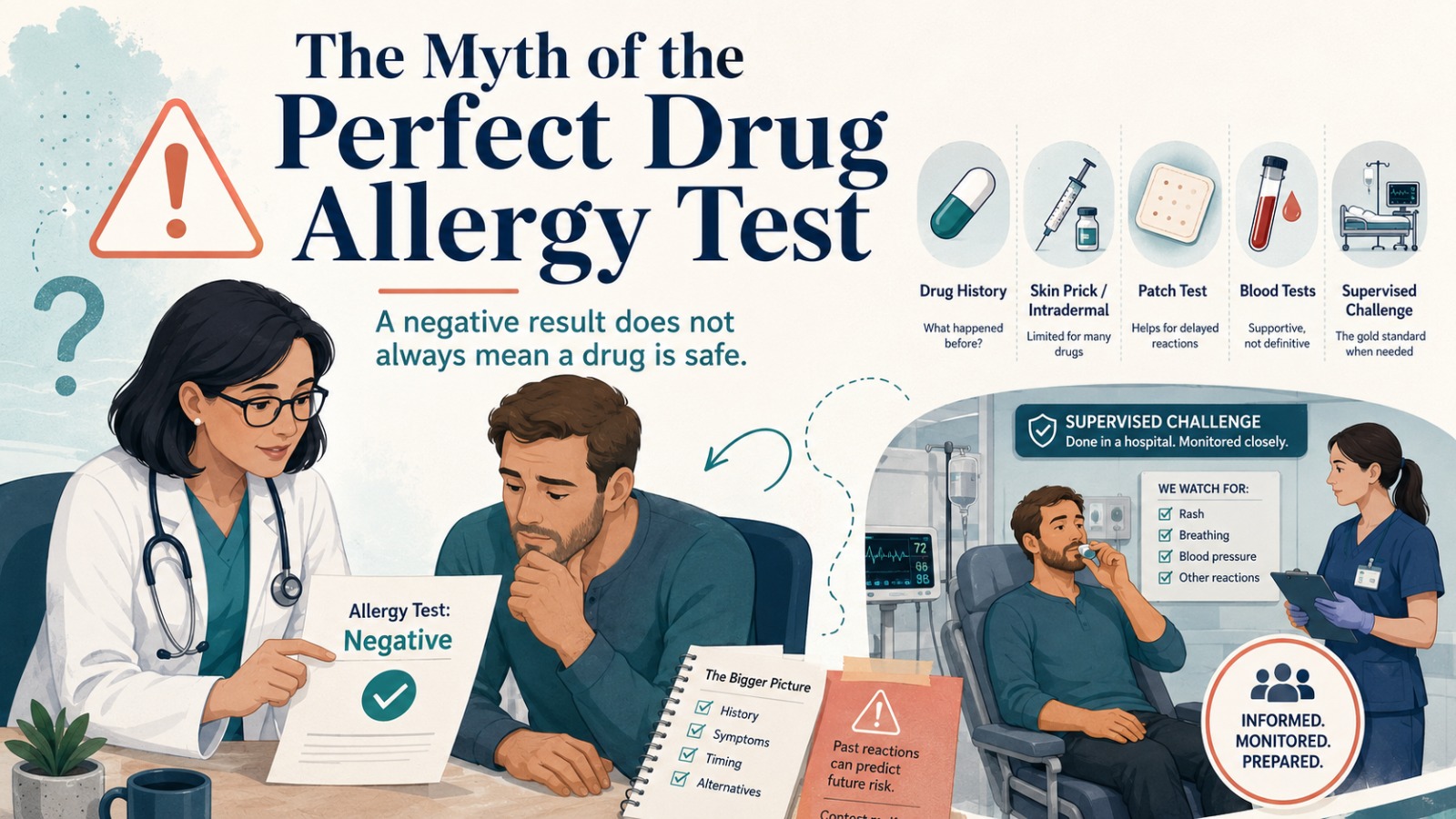
A drug allergy test can be useful, but it is often misunderstood. Many patients are told that a skin test, patch test, or blood test is negative and assume that the medicine is completely safe. In reality, each test answers only a specific clinical question.
Dr. Sasi Kiran Attili is a UK-trained dermatologist and board-certified dermatopathologist who evaluates complex skin reactions, including suspected drug allergy, delayed drug rashes, fixed drug eruptions, and severe cutaneous adverse drug reactions. A careful specialist assessment starts by asking what type of reaction occurred, when it happened, how severe it was, and whether testing is appropriate or potentially unsafe.
Understanding Drug Allergy
A drug allergy is an immune-mediated reaction to a medicine. It is different from a predictable side effect, drug intolerance, or expected pharmacological response. For example, nausea after an antibiotic, acidity after a painkiller, tremor after salbutamol, or sleepiness after an antihistamine may be unpleasant but not necessarily allergic.
True drug allergy can occur in different ways. Immediate reactions usually appear within minutes to a few hours and may cause hives, swelling, wheezing, throat tightness, dizziness, or anaphylaxis. Delayed reactions may appear after many hours or days and can cause widespread rashes, fixed drug eruption, eczema-like reactions, fever with rash, or more severe systemic illness.
This distinction is crucial because no single drug allergy test detects every type of reaction. A skin prick test, intradermal test, patch test, blood test, and supervised drug challenge all answer different questions. A negative result must therefore be interpreted in context.
Why a Negative Drug Allergy Test May Be Misleading
A negative drug allergy test does not always mean that a medicine is safe. It may only mean that the specific test did not show the specific type of reaction it was designed to detect, using that drug concentration, on that day, under those testing conditions.
Skin prick testing mainly evaluates immediate skin reactivity. It does not reliably exclude delayed drug rashes, severe delayed reactions, side effects, or future reactions. Intradermal testing may be more sensitive in selected settings, but it can also produce irritant reactions or false positives. Patch testing may help in selected delayed drug eruptions, but a negative patch test does not rule out drug allergy.
The Diagnostic Approach
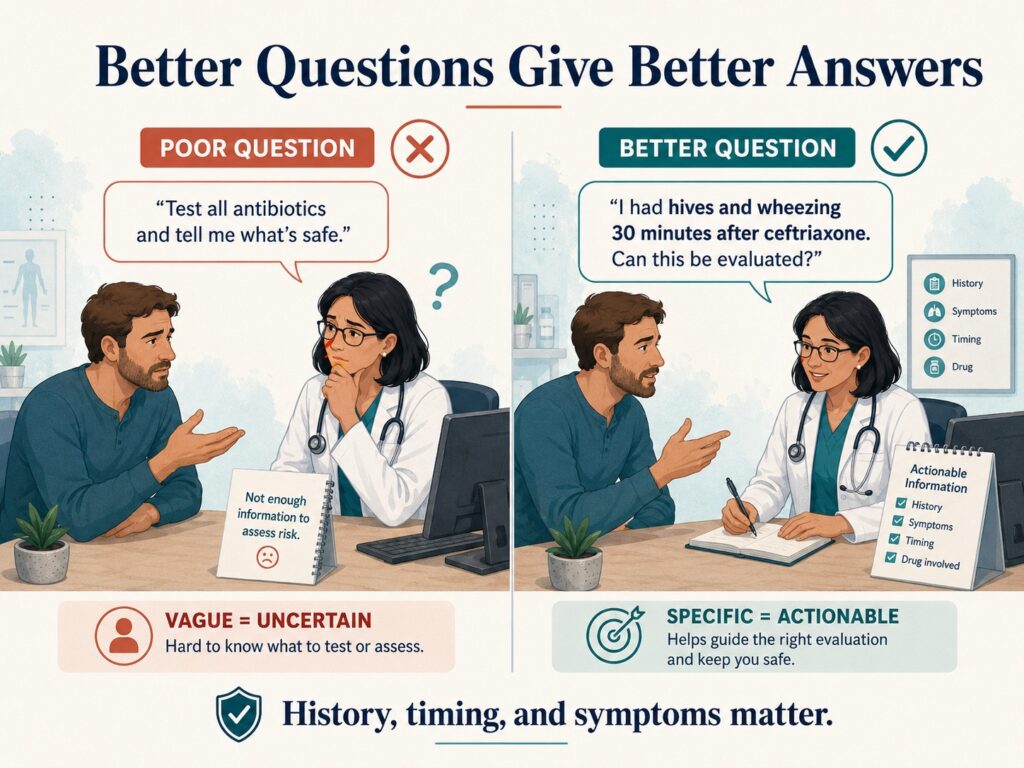
A specialist evaluation begins with a structured history. The key questions include the suspected medicine, timing of symptoms, type of rash or systemic reaction, treatment required, hospitalisation, previous tolerance of related medicines, and whether the patient has taken the same drug again.
Photographs of the eruption, prescriptions, previous allergy reports, discharge summaries, biopsy reports, and blood test results can help clarify the pattern. In some cases, the clinical diagnosis is more useful than testing. In others, testing or supervised challenge may be considered only after risk stratification.
The aim is not to “test all medicines.” The aim is to identify the likely mechanism, assess risk, document unsafe drugs, and decide which alternatives may be reasonable.
Evidence-Based Treatment Strategies
Management depends on the type and severity of reaction. For predictable side effects, allergy labelling may not be appropriate. The patient may need advice about dose, formulation, alternatives, or supportive measures. For intolerance reactions, especially with some painkillers, the clinical goal is often to identify safer options rather than prove a classic allergy.
For suspected immediate allergy, selected skin prick or intradermal testing may be useful, particularly for penicillin and certain related antibiotics. However, test interpretation must be cautious and linked to the original reaction history.
For delayed drug eruptions, patch testing may sometimes support the diagnosis, especially in selected skin reactions. In severe reactions such as Stevens–Johnson syndrome, toxic epidermal necrolysis, DRESS, severe vasculitis, hepatitis, nephritis, mucosal erosions, skin peeling, or organ involvement, routine challenge is inappropriate and may be dangerous.
Penicillin Allergy Labels and Why They Need Reassessment
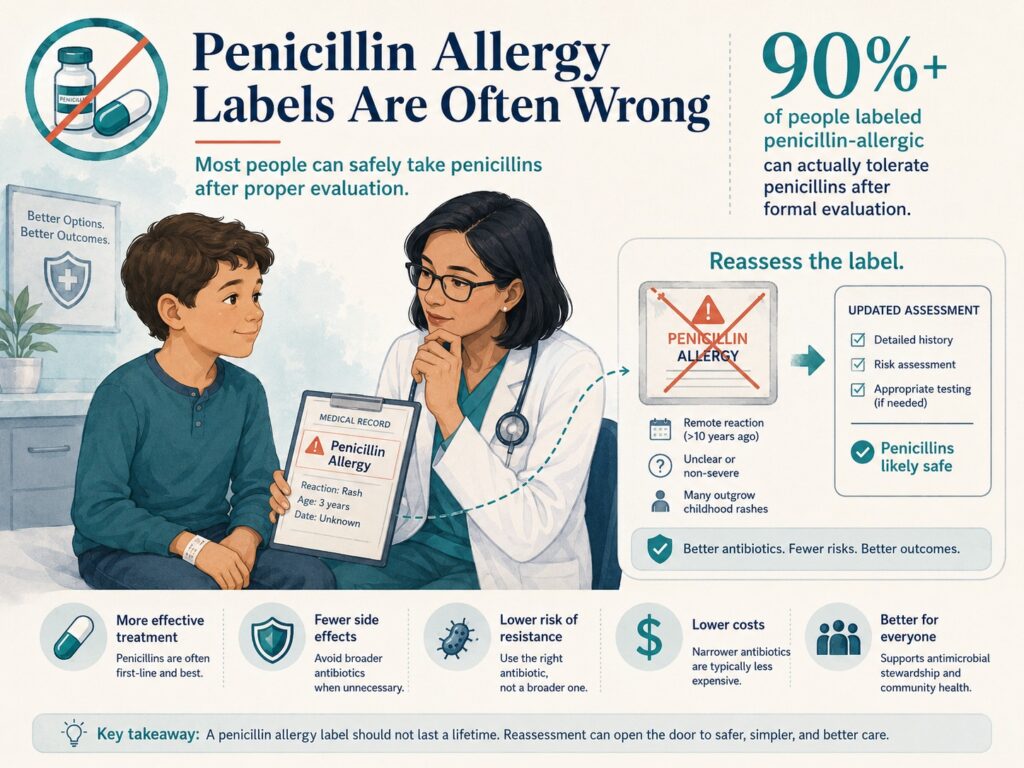
Penicillin allergy is one of the best examples of why drug allergy labels can persist long after they stop being accurate. Many patients are labelled allergic in childhood after a rash during fever or infection. Years later, the label remains, even when the details are unclear.
The consequence can be significant. Patients may avoid useful antibiotics unnecessarily and receive broader-spectrum or less suitable alternatives. Reassessment does not mean ignoring the history. It means asking whether the original reaction was low-risk, immediate, delayed, severe, or possibly unrelated to the drug.
Who Should Seek a Second Opinion or Online Consultation?
Patients with unclear drug allergy labels often benefit from specialist review, especially when the label affects treatment choices. This includes people told they are allergic to multiple antibiotics, patients who developed a rash after amoxicillin or another antibiotic, and patients unsure whether a painkiller reaction was allergy or intolerance.
Frequently Asked Questions
Can drug allergy be treated through an online consultation?
Drug allergy itself is not treated online in the sense of performing tests or challenges remotely. However, an online consultation can be very useful for reviewing the reaction history, photographs, prescriptions, reports, and previous allergy test results.
Does a negative drug allergy test mean I can safely take the medicine?
Not always. A negative test only means that the specific test did not detect the specific reaction it was designed to assess.
What is the difference between a skin prick test and a patch test?
A skin prick test mainly looks for immediate skin reactivity. A patch test is used in selected delayed skin reactions and is read after a longer interval.
If you have a complex suspected drug allergy, delayed drug rash, penicillin allergy label, painkiller reaction, or confusing negative allergy test result, Dr. Attili offers structured online consultations for specialist review and second opinion. Book Online Consultation.