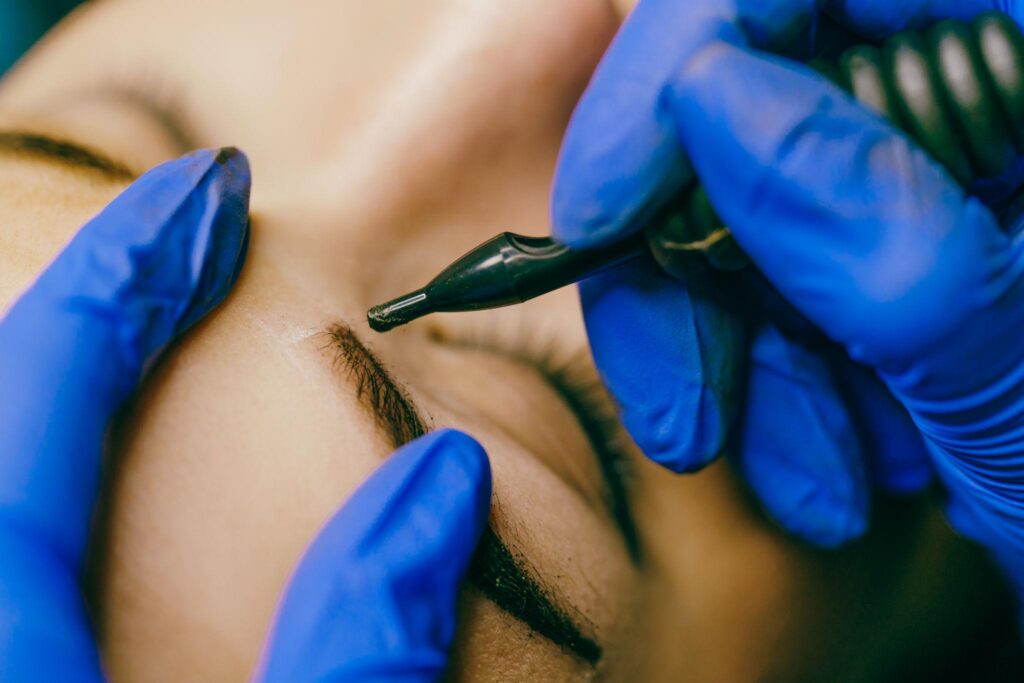
Microblading is widely described as a “semi-permanent” cosmetic procedure. In reality, it is a form of superficial tattooing with long-term biological consequences. Many patients present years after the procedure with concerns such as greying, blurring, or uneven pigment.
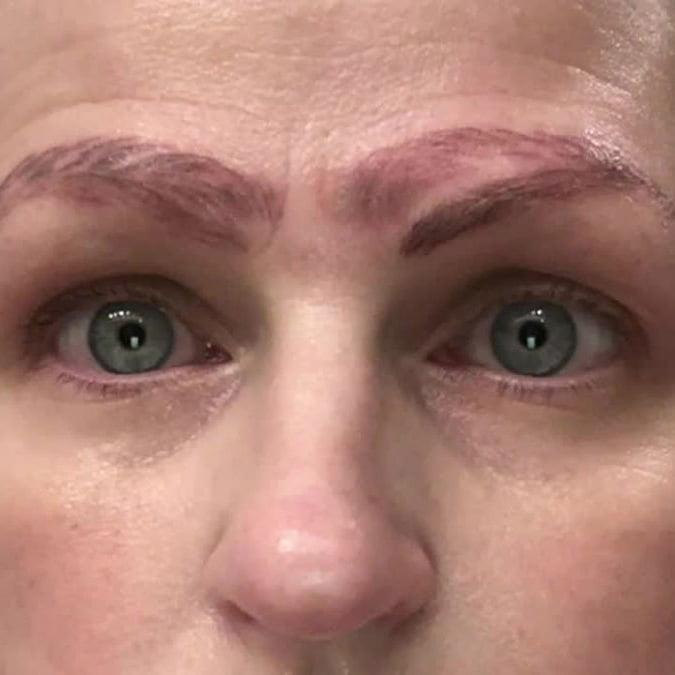
These outcomes are often perceived as complications. In many cases, they represent the natural Evolution of pigment within the skin..
Understanding Microblading
Microblading involves the manual deposition of pigment into the superficial dermis using fine needles. Once placed, the pigment is taken up by dermal cells such as macrophages and fibroblasts — similar to conventional tattoos.
The term “semi-permanent” refers not to a distinct biological process, but to the amount and depth of pigment placed.
Why Microbladed Brows Turn Grey or Blur
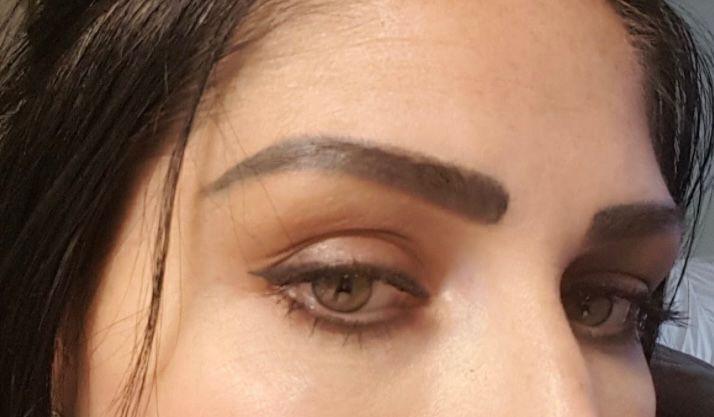
- Pigment dispersion over time
- Loss of stroke definition
- Tyndall effect causing blue-grey colour
- Pigment chemistry changes
- Repeated sessions causing muddy colour
Why Expectations Fail
Many individuals expect microblading pigment to fade completely over time. However, long-term outcomes often differ due to several biological and procedural factors:
- Pigment does not fully disappear
- Repeat procedures worsen clarity
- Skin healing varies between individuals
Treatment Options
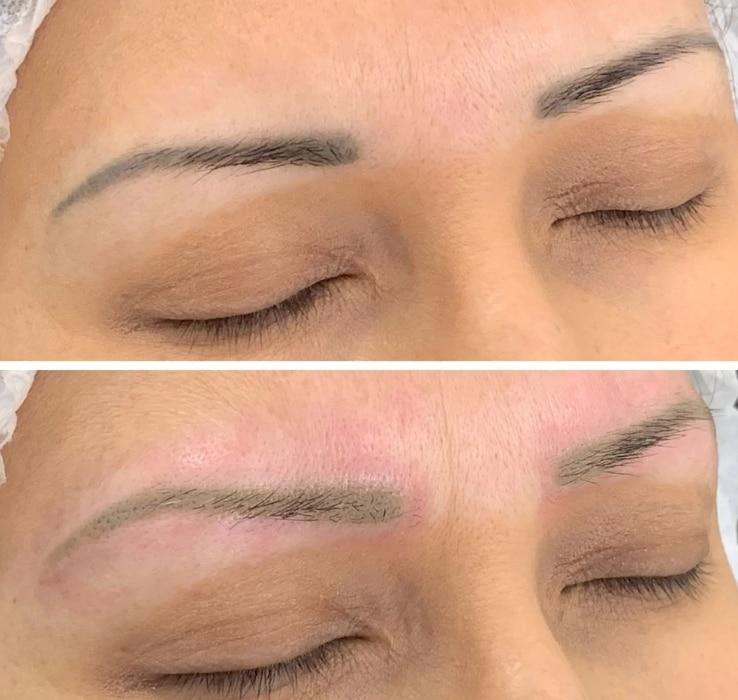
Management depends on the degree of pigment change, cosmetic concern, and patient expectations. Available treatment approaches may include:
- Observation
- Laser removal (multiple sessions may be required)
- Cosmetic camouflage
Important: Complete pigment removal is not always possible.