
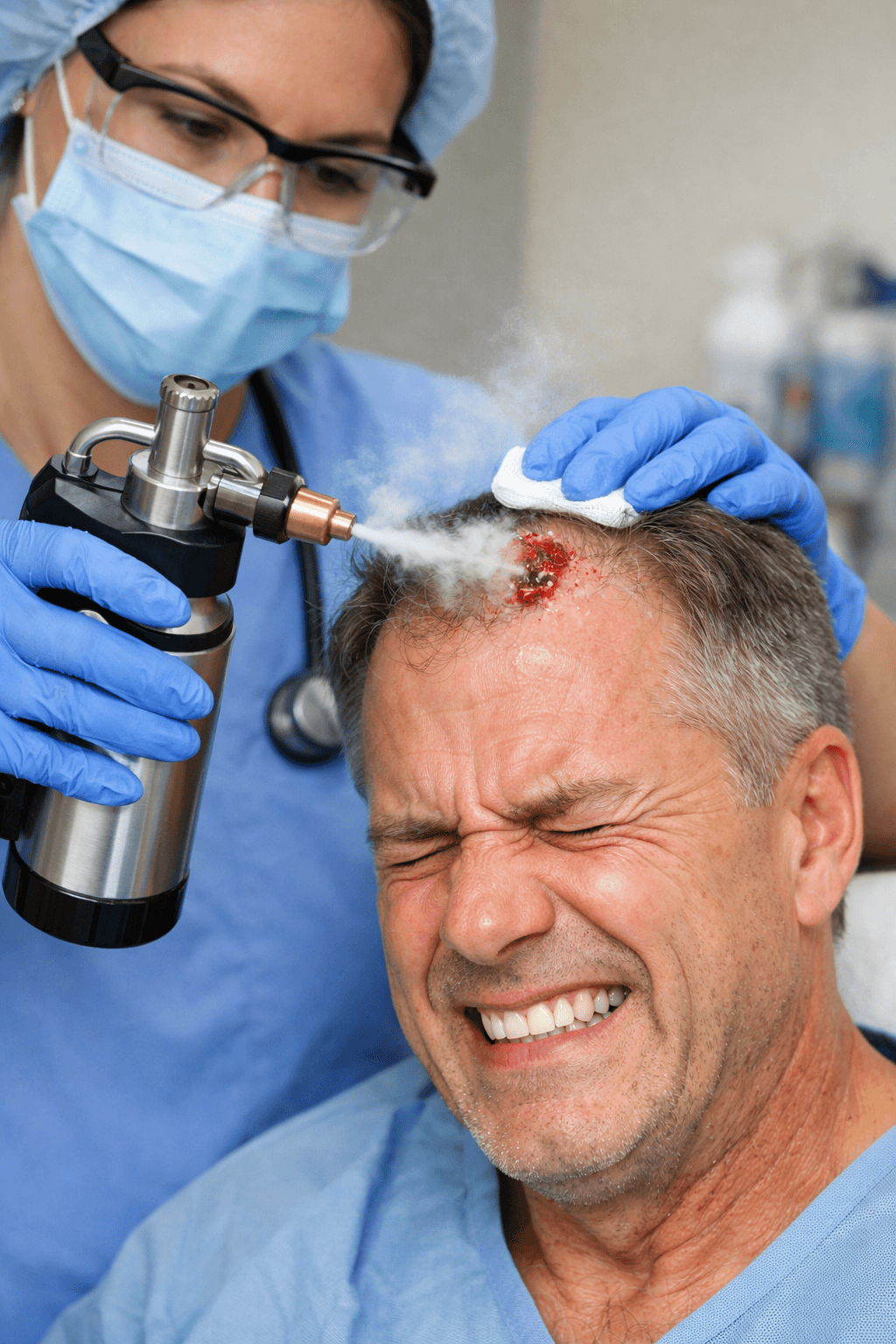
Cryotherapy has been a standard dermatologic procedure for decades and is commonly used to treat warts, skin tags, and other benign skin lesions. However, modern dermatology clinics now have access to additional techniques, including radiofrequency (RF) ablation, which allows more controlled lesion removal.
Dr. Sasi Kiran Attili, a UK-trained dermatologist and dermatopathologist, frequently evaluates patients who have undergone multiple treatments for persistent skin lesions without clear resolution. Understanding how different procedures work can help patients and clinicians choose the most appropriate method for each case.
Understanding Cryotherapy and Benign Skin Lesions
Benign skin lesions include conditions such as viral warts, skin tags (acrochordons), seborrhoeic keratoses, and certain benign tumours of the skin. Although these lesions are non-cancerous, they may cause cosmetic concern, discomfort, bleeding, or irritation.
Cryotherapy removes lesions by rapidly freezing tissue with liquid nitrogen, causing controlled cellular destruction. The frozen tissue later forms a blister or crust and eventually separates from the surrounding skin.
The effectiveness of cryotherapy depends on factors such as freeze duration, lesion thickness, and skin type. In many dermatology practices worldwide, it remains a practical treatment option.
Why Standard Treatments Sometimes Require Multiple Sessions
Many patients seek consultation after undergoing repeated cryotherapy sessions with incomplete clearance of warts or other lesions. This does not necessarily indicate incorrect treatment but reflects the biological variability of lesions and the mechanism of freezing therapy.
Cryotherapy relies on estimating how deeply the freezing penetrates the skin. In some cases, this may result in partial destruction of the lesion, requiring additional treatments.
Patients with darker skin types may also experience pigmentary changes after aggressive freezing, which dermatologists must consider when selecting treatment methods.
The Diagnostic Approach
Before recommending removal, a dermatologist evaluates several key factors:
- whether the lesion is benign
- the possibility of a viral or infectious cause
- the depth and structure of the lesion
- cosmetic considerations
Dermatologists with dermatopathology training may also recommend biopsy or histopathological evaluation if the diagnosis is uncertain.
A precise diagnosis ensures that treatment targets the correct condition and avoids unnecessary procedures.
Evidence-Based Treatment Strategies
Modern dermatology offers several approaches to removing benign lesions.
Cryotherapy remains widely used because it is fast and effective for many superficial lesions. It is commonly used for viral warts and certain precancerous lesions.
Radiofrequency ablation (RF) uses controlled electrical energy to remove tissue under direct visualisation. The dermatologist can remove the lesion gradually and adjust the depth during the procedure. RF ablation is frequently used for:
- skin tag removal
- genital warts
- resistant warts
- cosmetically sensitive lesions
Both techniques have roles in dermatologic practice. The optimal choice depends on lesion type, skin type, patient preference, and available equipment.
Who Should Seek a Second Opinion or Online Consultation?
A specialist dermatology consultation may be useful for:
- patients with warts or lesions that persist despite repeated treatment
- individuals experiencing pigmentary changes after previous procedures
- patients told that “nothing further can be done”
- people outside India seeking expert dermatology guidance
- individuals confused by conflicting treatment advice
In such cases, a detailed evaluation can clarify whether an alternative procedure or diagnostic step may be helpful.
Frequently Asked Questions
Is cryotherapy always the best treatment for warts?
Cryotherapy is effective for many warts but is not the only option. Some lesions respond better to other procedures such as RF ablation or minor surgical removal.
Why do some warts return after treatment?
Warts are caused by viruses within the skin. If a portion of infected tissue remains, the wart may recur or require additional treatment sessions.
Can benign skin lesions be evaluated through an online consultation?
Yes. Many lesions can be assessed initially through high-quality photographs and medical history. In some cases, an in-person examination may still be recommended.
What does a dermatopathologist look for that a regular dermatologist might miss?
Dermatopathologists specialise in examining skin tissue under the microscope. This training allows deeper evaluation of ambiguous lesions and helps confirm diagnoses when clinical appearance alone is uncertain.
If you have a complex skin lesion case, have tried treatments without success, or need a specialist second opinion, Dr. Attili offers structured online consultations. Book Online Consultation.